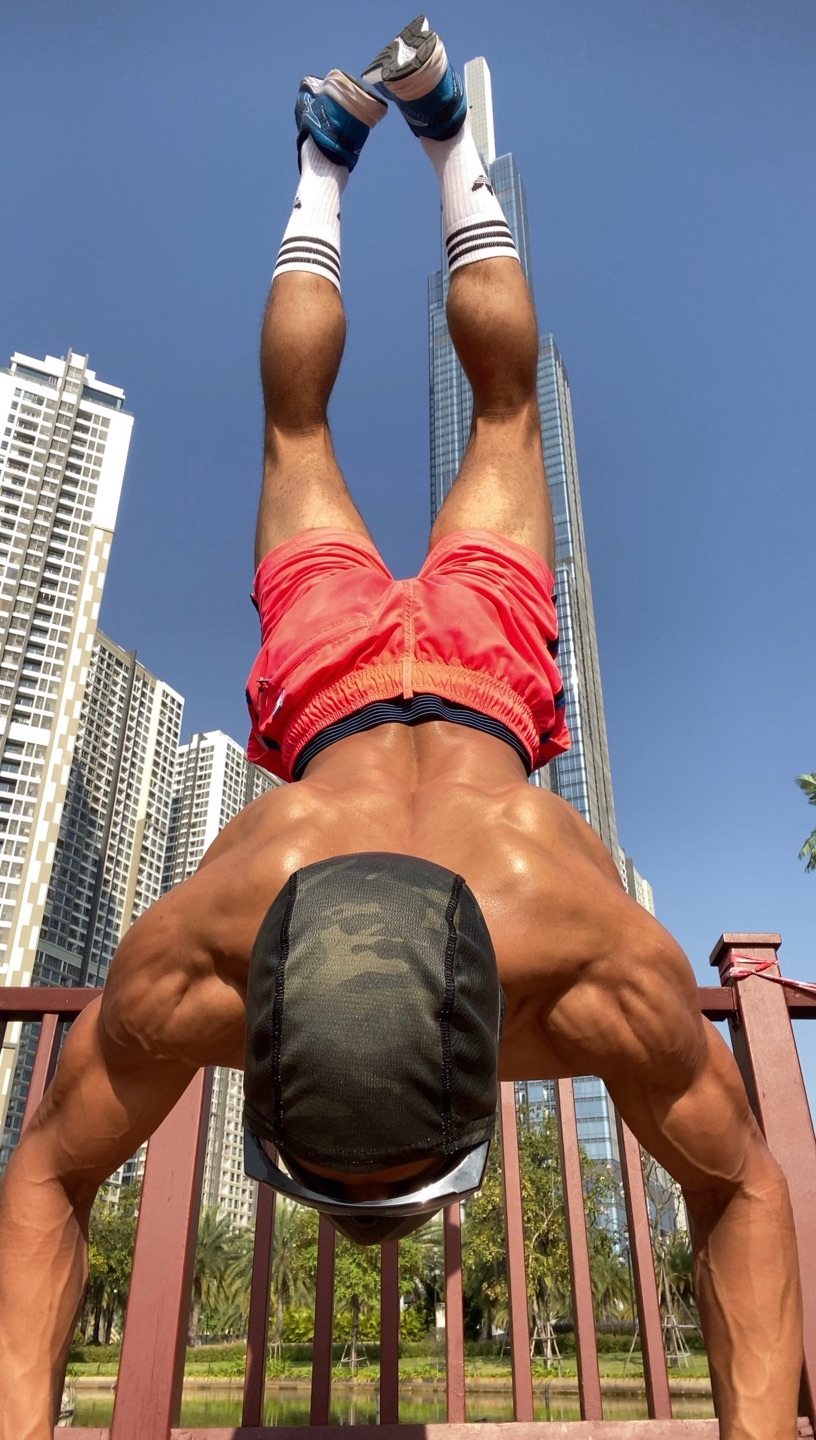
The OYOTTA visual record includes a set of static-hold images photographed against city skylines. Side plank imagery exists among them, and the frames share one compositional idea: a held position, photographed in profile, with the vertical city stacked behind it.
Framing
The photographs place the camera low and level with the deck surface. The held position runs horizontally across the lower third of the frame; the skyline fills the upper two-thirds. In the side plank images the supporting forearm sits nearest the lens, the feet stacked farthest from it, and the body's straight line crosses the frame roughly parallel to the deck edge. Tower faces behind supply vertical counterpoint to the horizontal figure.
The Hold Itself
What the images document is position and stillness. Forearm down, feet stacked or staggered, the line from head to heel unbroken — the pose reads identically across successive frames, which is the point the set makes: repetition of an identical shape, not progression through shapes. Sequences of exposures taken from the same tripod mark show only small differences — a hand repositioned, the head turned — indicating the position was reset between exposures rather than abandoned.
Environment
The settings are elevated outdoor decks at dusk or after dark. City lights provide the exposure; the subject is lit by the ambient glow of the skyline being photographed. Wind moves nothing in the frame except distant traffic. Where ropes and skipping films show motion, this portion of the record shows its opposite: a fixed figure against a fixed skyline, both holding.
Register of the Set
The photographs record placement, alignment and surroundings. They state where the hold happened, what it looked like from one fixed vantage, and what stood behind it — nothing more is claimed.